|
Directions: Read carefully. Choose the best answers.
1. |
Which of the following sets represents a one-to-one function?
|
|
|
2. |
Functions f (x) and g(x) are represented by the tables shown at the right.
Which function is a one-to-one function?
|
|
|
|
|
|
3. |
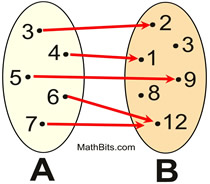
Is function A, as depicted, an example
of a 1-1 function? |
|
|
Choose:
|
|
4. |
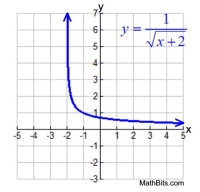
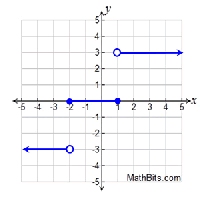
Which of graph(s) shown below represent one-to-one functions?
|
|
|
|
5. |
Which of the following functions is a one to one function over the domain of real numbers?
|
|
| |
Choose:
|
|
6. |
The fastest way to determine if the inverse of a function is itself a "function", is to observe whether the graph of the original function shows a ___________.
|
|
|
Choose:
|
|
7. |
It is given that a function has two input values that produce the same output value. Which description could possibly be true about this function?
|
|
|
Choose:
|
|
8.
|
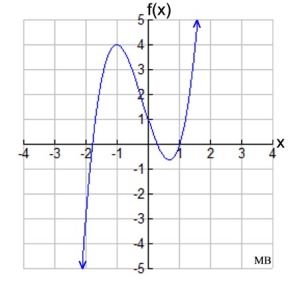
Function f (x) is shown at the right.
The domain of the graph to be considered for this question, is restricted to only the region of the graph that is decreasing.
a) What is the domain of the section of the graph that is decreasing?
Choose:
|
f (x) = 2x3 + x2 - 4x + 1
|
| |
b) Is this function a one-to-one function on the restricted domain?
Choose:
|
|

NOTE: The re-posting of materials (in part or whole) from this site to the Internet
is copyright violation
and is not considered "fair use" for educators. Please read the "Terms of Use". |
|